

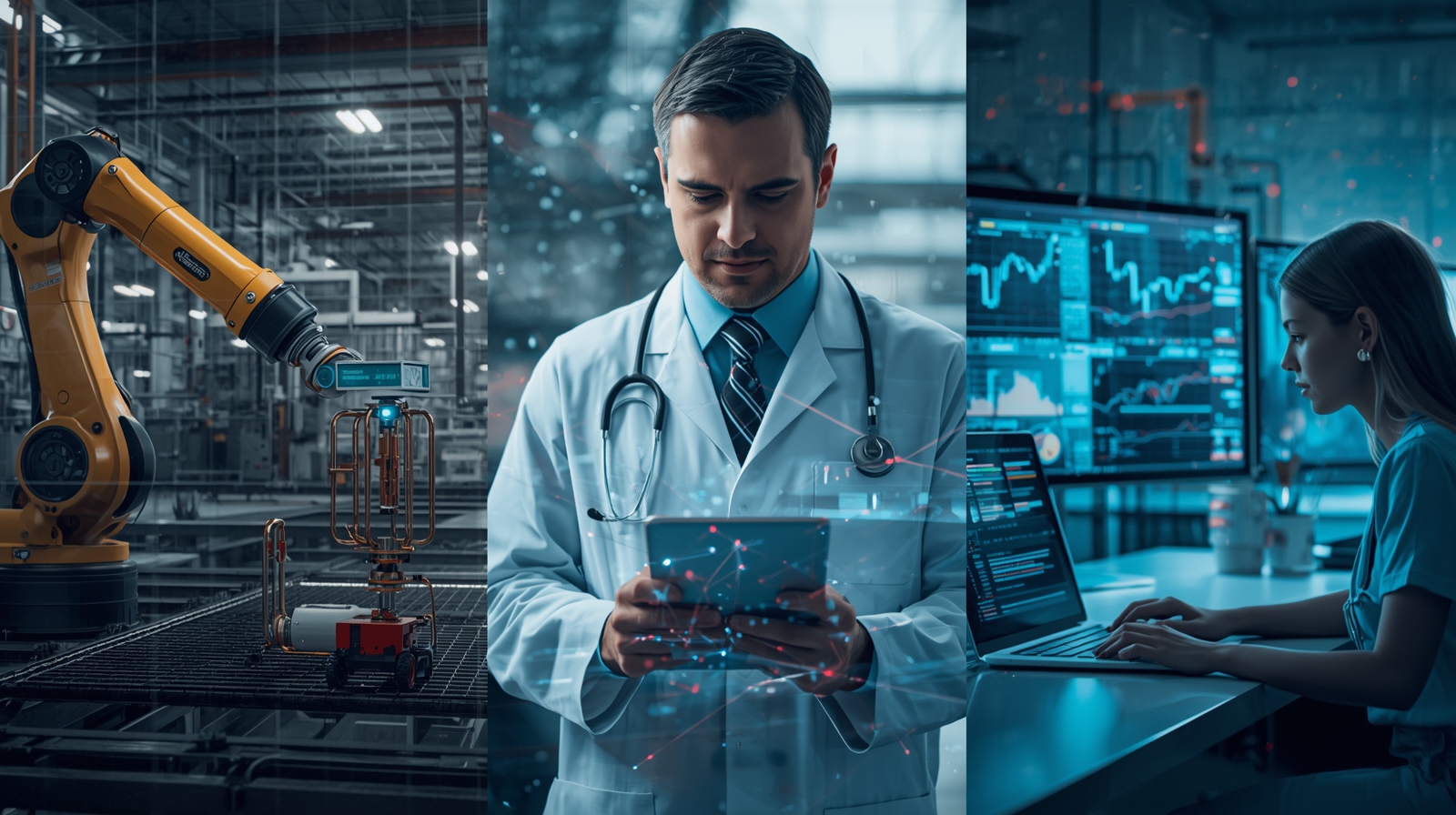
Artificial Intelligence (AI) is no longer a concept limited to research laboratories or science discussions. It has become a central force across industries, influencing how data is used, how businesses operate, and how people interact with technology. Machine Learning (ML), a core branch of AI, allows systems to learn from data, identify patterns, and make decisions without explicit programming.
The progress of machine learning has shifted AI from a theoretical idea into a key operational tool. It drives innovations in automation, healthcare, finance, logistics, education, and everyday digital experiences. This article explores the current role of machine learning, how it is shaping industries, the challenges it brings, and what the future might look like as AI continues to evolve.
1. Understanding Machine Learning
Machine Learning is a method of data analysis that automates model building. It enables systems to learn and improve from experience. Instead of relying on strict instructions, ML algorithms find patterns in data and use them to make predictions or recommendations.
There are several types of learning in this domain:
- Supervised Learning – models learn from labeled data where outcomes are known.
- Unsupervised Learning – models find structure in unlabeled data.
- Reinforcement Learning – systems learn by interacting with environments and receiving feedback.
These methods enable machines to interpret complex data sets and support decision-making processes that once required human judgment.
2. How Machine Learning Is Transforming Industries
2.1 Healthcare
Machine learning plays a key role in medical imaging, diagnostics, drug discovery, and patient care. Algorithms can analyze scans, identify irregularities, and predict disease risks from patient data. Predictive models assist in early detection, improving treatment outcomes and resource use in hospitals.
Pharmaceutical companies use ML models to analyze biological data, identify compounds, and optimize clinical trials. Healthcare providers apply ML tools for personalized treatment plans and administrative efficiency.
2.2 Finance
In finance, machine learning drives fraud detection, risk assessment, algorithmic trading, and credit scoring. Models can monitor transaction patterns to detect anomalies that suggest fraud. Financial institutions use ML to predict market trends, manage portfolios, and assess borrower reliability.
Robo-advisors employ learning algorithms to offer automated investment strategies. ML also supports compliance by detecting irregularities and ensuring adherence to financial regulations.
2.3 Transportation and Logistics
Machine learning supports route optimization, predictive maintenance, and demand forecasting. Logistics companies use ML to improve delivery times, reduce fuel consumption, and minimize downtime.
In the automotive sector, ML powers driver-assistance systems and self-driving vehicles. These systems process large volumes of sensor data to make real-time driving decisions and enhance safety.
2.4 Retail and E-commerce
Retailers use machine learning to predict buying behavior, manage inventory, and improve customer engagement. Recommendation engines suggest products based on browsing and purchase history.
Dynamic pricing models use ML to adjust prices according to demand and competition. In supply chains, ML forecasts product needs, reducing waste and maintaining stock balance.
2.5 Education
Machine learning tools personalize learning paths based on student performance data. They identify areas of struggle and adapt materials accordingly. Educational institutions also use ML for administrative planning, admission forecasting, and early intervention for students at risk.
2.6 Manufacturing
Manufacturing sectors use ML to predict equipment failures, optimize production schedules, and maintain quality control. Sensors collect data on machinery performance, allowing predictive models to signal maintenance before breakdowns occur.
This predictive capacity reduces costs, minimizes downtime, and supports a continuous improvement cycle in industrial processes.
3. Machine Learning in Everyday Life
AI-driven tools are now part of everyday interactions. Voice assistants, search engines, streaming platforms, and social media rely on ML algorithms to personalize content and enhance user experience.
Search engines use ML to rank results based on relevance. Streaming services recommend content according to viewing history. Voice assistants process natural language and respond contextually. These systems continuously refine their outputs using user feedback and interaction data.
Email filters, fraud alerts, and customer service chatbots are other examples where ML enables convenience and efficiency. Its presence has become integrated into daily routines, often unnoticed but highly influential.
4. The Data Behind Machine Learning
Data is the foundation of machine learning. The accuracy and reliability of a model depend on the quality, quantity, and diversity of data used in training. Clean, well-labeled data leads to better predictions, while biased or incomplete data can lead to flawed outcomes.
The demand for massive data sets has led to an increase in data collection from digital interactions, sensors, and connected devices. Managing, securing, and interpreting this data responsibly is a growing challenge for both organizations and governments.
Data privacy, ownership, and consent are central topics as machine learning expands. Transparency in data use and algorithmic decisions is essential to build public trust.
5. Ethical and Social Implications
As AI systems gain influence, ethical issues become critical. Machine learning models can reinforce bias if trained on skewed data. Decisions made by AI systems, especially in hiring, lending, or law enforcement, can have serious social impacts.
Accountability for automated decisions remains an unresolved issue. Governments and organizations are developing frameworks to ensure fairness, explainability, and compliance with ethical standards.
The balance between innovation and regulation is essential. Responsible AI development requires transparency in model design, interpretability of results, and continuous oversight.
6. The Role of AI in the Future Workforce
AI and machine learning are transforming the nature of work. Routine tasks across sectors are increasingly automated, allowing human workers to focus on strategic and creative functions.
However, automation also creates displacement risks in roles based on repetition and data entry. The demand for skills in data science, AI engineering, and digital literacy continues to grow. Workforce adaptation through upskilling and lifelong learning is necessary for economic stability.
Educational systems are responding by integrating AI and coding courses into curricula. The collaboration between human insight and machine efficiency defines the future of productive work.
7. Machine Learning and Innovation
Machine learning drives research and innovation by enabling faster experimentation and discovery. In scientific fields, ML assists with data modeling, hypothesis testing, and simulation.
In agriculture, ML helps predict crop yields and optimize resource use. In energy sectors, it supports predictive maintenance in grids and renewable systems. The combination of machine intelligence and human creativity accelerates progress across scientific and industrial domains.
Innovation supported by machine learning is reshaping competitive advantages. Businesses that leverage AI effectively can make data-driven decisions and anticipate market trends with higher accuracy.
8. Challenges Facing Machine Learning
Despite its progress, machine learning faces challenges that limit scalability and reliability.
8.1 Data Quality and Bias
Biased data leads to biased predictions. Cleaning and balancing data sets is a continuous task that requires time and expertise.
8.2 Model Explainability
Complex models such as deep neural networks often act as black boxes. Understanding how they reach conclusions is difficult, reducing trust in critical applications like healthcare or finance.
8.3 Computational Demand
Training large models requires significant computing power and energy. Sustainability and accessibility become concerns as hardware demand grows.
8.4 Security Risks
ML systems can be targeted with adversarial attacks that manipulate input data to deceive models. Protecting AI infrastructure from such threats is an emerging priority.
8.5 Regulation and Policy
Regulatory frameworks are still evolving. Ensuring that AI systems comply with laws while maintaining innovation speed is a complex policy challenge.
9. The Future Direction of AI and Machine Learning
The future of AI lies in integrating learning systems more deeply with human processes. Several key directions are emerging:
- Edge AI: Running ML models directly on devices for faster processing and privacy.
- Explainable AI (XAI): Building transparent systems that clarify how decisions are made.
- Federated Learning: Training models across decentralized data sources to protect privacy.
- AI for Sustainability: Using ML to monitor environmental impact, manage energy use, and predict natural events.
- AI Governance: Establishing ethical and legal frameworks for accountability and oversight.
AI will not replace human intelligence but will extend it. Collaboration between humans and machines defines the next stage of development.
10. Conclusion
Machine learning has evolved from experimental systems into a foundation for digital transformation. Its role extends across sectors, influencing decisions, operations, and innovation. The combination of computational power and data-driven insight continues to redefine how organizations and societies function.
As the technology matures, attention must shift toward responsible implementation, transparency, and equity. The potential of AI is vast, but its benefits depend on the choices made today regarding ethics, education, and governance.
The future of AI is not about machines replacing humans but about creating systems that learn, support, and advance collective progress. Machine learning will continue to shape how the world processes information, solves problems, and builds new possibilities.